
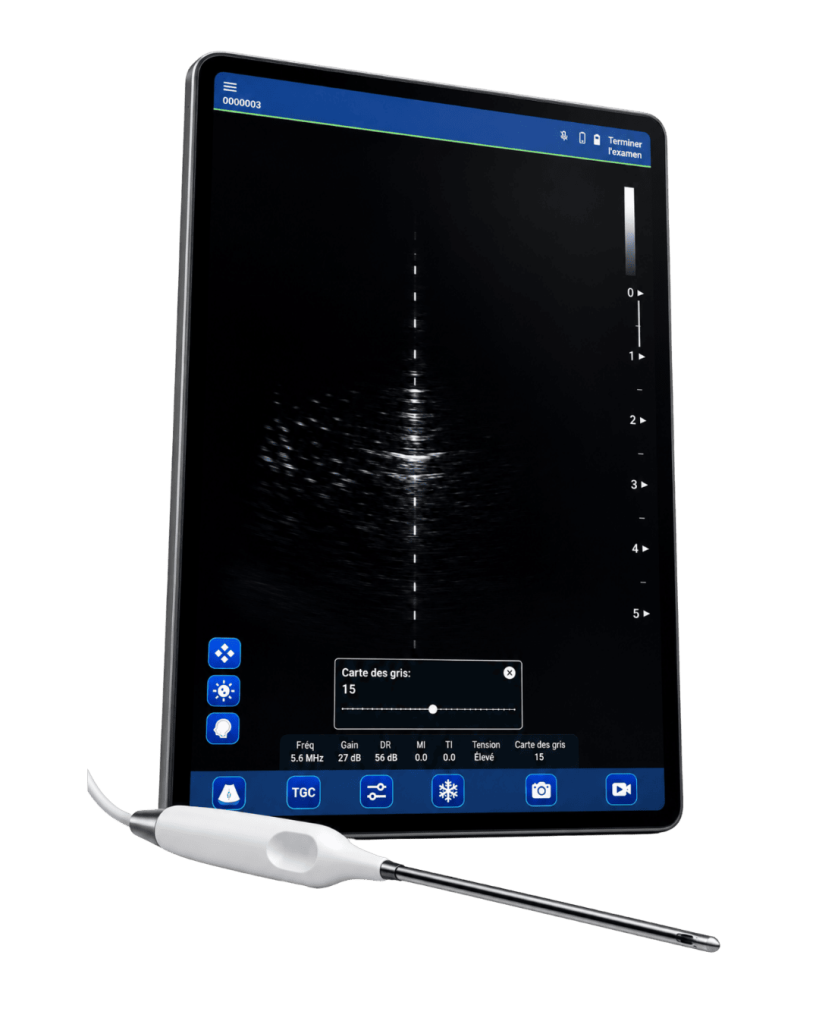
OnePath pairs two components, used with a dedicated ultrasound
At the heart of the system is our miniaturized echographic probe. This forward-looking technology provides real-time, high-resolution ultrasound imaging from within the catheter, allowing for unprecedented navigational precision.
The probe is powered by a specialized ultrasound scanner. This system includes advanced image post-processing dedicated to shunt placement, ensuring that neurosurgeons have the highest quality visual feedback throughout the procedure.
This integrated approach is completed by standard accessories—including a dedicated trocar for secure tunneling and a luer-lock connector—ensuring that OnePath fits seamlessly into existing surgical workflows while providing a leap forward in safety and accuracy.
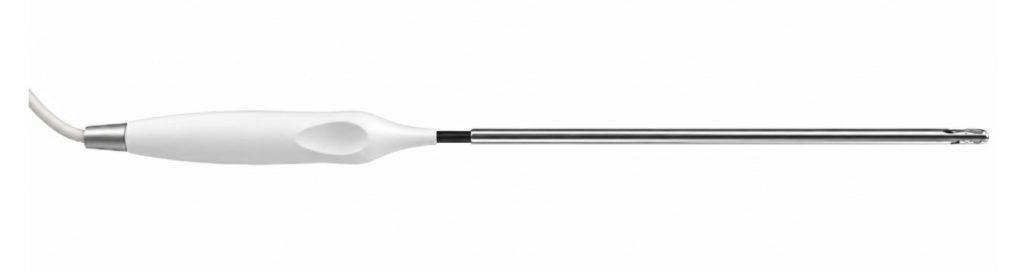
Unlike traditional methods, the 6MHz forward-looking phased-array provides a live view of the ventricular anatomy directly from the catheter tip, allowing surgeons to navigate with absolute confidence.
OnePath maintains the standard biomechanical properties and accessories (trocar and luer-lock) that surgeons are already familiar with. It enhances the procedure without requiring a change in the fundamental surgical workflow.
The custom-reworked catheter tip is specifically designed to balance high-fidelity ultrasound transmission with efficient fluid drainage via eight side perforations, ensuring no compromise in patient safety or device performance.
By ensuring a « first-time right » placement in the treatment of hydrocephalus, OnePath aims to reduce the risk of intracranial hemorrhage and trauma associated with repeated attempts.
By utilizing our dedicated image post-processing, clinicians can identify the optimal trajectory in real-time, significantly reducing the risk of multiple passes and misplaced catheters.
Are you interested in learning more about how OnePath can enhance surgical precision and patient outcomes in your department?
Our team is ready to provide technical insights, clinical data, or a live demonstration of the ECUS technology.